UK Summer 2026 Could Break Heat Records with Average August Temps
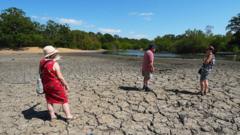
2026 Summer Approaching Historic Heat Levels Across UK
The UK's summer in 2026 is poised to become the nation's hottest on record, according to meteorological assessments. Officials have indicated that merely maintaining average temperature conditions throughout the remainder of August would be sufficient to surpass the previous benchmark established in 2025.
What Makes This Summer Exceptional
The trajectory toward record-breaking temperatures in the UK summer of 2026 has been consistent and pronounced. The seasonal pattern has already demonstrated significant warming across the British Isles, with July delivering notably elevated temperatures that contributed substantially to the overall seasonal total.
Meteorological experts emphasize that the UK's summer records are measured by seasonal averages rather than individual daily peaks. This means that even moderate temperature readings during August's final weeks could cement 2026's position as the warmest summer ever documented in the United Kingdom.
Previous Records and Context
The record holder established just twelve months earlier in 2025 set an exceptionally high baseline for comparison. That previous summer demonstrated the dramatic shift in climate patterns affecting the British Isles, with sustained warmth throughout the season pushing average temperatures to unprecedented levels.
The fact that 2026 appears poised to exceed such a recently set record underscores the trend of increasingly intense seasonal warming. Climatic analysts have noted that beating a record set merely a year prior indicates a concerning acceleration in temperature elevation across successive summers.
August's Critical Role
As the final full month of meteorological summer, August holds decisive importance for the annual temperature record. The Met Office observations suggest that maintaining typical August conditions—neither exceptionally warm nor unusually cool—would suffice to surpass 2025's achievement.
This relatively low threshold for breaking the UK's hottest summer record on 2026 reflects how substantially elevated temperatures have been during June and July. The accumulated heat from the earlier summer months has already positioned the season so far ahead of historical norms that normal August weather would prove sufficient to establish a new benchmark.
Climate Pattern Implications
The trajectory of UK summer temperatures across consecutive years carries significant implications for long-term climate understanding. Successive record-breaking summers occurring in adjacent years suggest that the underlying atmospheric conditions driving these patterns may represent a more persistent shift rather than isolated anomalies.
Meteorological monitoring throughout the 2026 summer season has provided valuable data for climate scientists studying warming trends across the Northern Hemisphere. The UK, positioned at a latitude where climatic shifts often become apparent earlier than global averages, serves as an important indicator for broader European and North Atlantic weather system changes.
Monitoring and Forecasting Accuracy
The confidence with which forecasters have identified 2026 as the likely hottest summer on record reflects the advanced state of seasonal prediction models. Modern meteorological science enables increasingly precise assessment of cumulative temperature trends several weeks in advance, though individual day-to-day variations remain inherently unpredictable.
The Met Office's assessment incorporates comprehensive data from weather stations across the United Kingdom, satellite measurements, and sophisticated computer modeling. These integrated systems allow meteorologists to project with reasonable certainty whether the threshold for beating the previous record will be crossed during the final weeks of August.
What Comes Next
Should August 2026 deliver average conditions as expected, the UK will officially record its hottest summer since records began. This designation carries implications for agricultural productivity, water resource management, and public health planning across the nation. Communities and infrastructure systems developed under historical climate parameters may face increasing stress from repeated record-breaking seasons occurring in succession.


