Trump Reduces Military Drills with South Korea Following Iran Conflict Restraint
Trump Administration Scales Back Military Drills with South Korea
The Trump administration has announced significant reductions in military drills with South Korea, a major shift in defense strategy that reflects broader geopolitical considerations on the Korean peninsula. The decision to reduce the scope and scale of joint military drills represents a substantial change in the approach to regional security cooperation, marking a departure from previous administrations' protocols.
Relationship with North Korea's Leadership
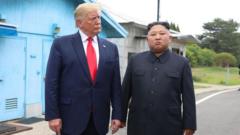
Trump attributed the decision to scale back military drills with South Korea to his established diplomatic relationship with North Korean leader Kim Jong Un. The president emphasized the importance of maintaining favorable communications channels, noting that his "very good relationship" with the North Korean regime has influenced strategic calculations regarding defense exercises in the region. This personal diplomatic connection has become a cornerstone of Trump's approach to managing tensions on the peninsula.
The rationale behind reducing military drills with South Korea stems from Trump's belief that such large-scale exercises could undermine the progress made through diplomatic engagement with Pyongyang. By demonstrating restraint in military activities, the administration seeks to maintain the momentum of negotiations and prevent potential escalations that could disrupt dialogue channels established through previous summits.
Context of Iran Conflict Restraint
The announcement coincides with South Korea's measured response to recent confrontations between the United States and Iran. Despite pressure to participate more directly in American military operations, South Korea has exercised significant restraint, a position the Trump administration has acknowledged and apparently rewarded through the reduction of joint military exercises. This diplomatic recognition of South Korea's cautious stance demonstrates the interconnected nature of regional security issues across Asia and the Middle East.
Strategic Implications for Regional Security
The reduction in military drills with South Korea carries substantial implications for security arrangements throughout Northeast Asia. These joint exercises have historically served as demonstrations of the strength of the alliance between Washington and Seoul, as well as reassurance to other regional partners concerned about North Korean military capabilities and intentions. The downscaling of these operations signals a shift in prioritization toward diplomatic engagement over military posturing.
Military analysts have noted that while the reduction may ease tensions with North Korea, it also presents potential risks to deterrence capabilities on the peninsula. The balance between maintaining strong defensive readiness and avoiding actions that could provoke Pyongyang remains delicate, requiring careful calibration of both military and diplomatic efforts.
Historical Context of US-South Korea Exercises
Joint military drills between the United States and South Korea have been a fundamental component of their alliance since the Korean War armistice. These exercises, often conducted semi-annually, have served multiple purposes including maintaining interoperability, testing defense systems, and demonstrating commitment to the mutual defense treaty binding the two nations. The decision to reduce their scope represents a notable departure from decades of consistent practice.
Previous administrations maintained robust exercise schedules despite periods of North Korean provocation and nuclear weapons development. The shift toward reducing military drills with South Korea under Trump's leadership reflects his administration's distinct approach to managing the North Korea challenge through diplomatic channels rather than traditional military deterrence frameworks.
South Korea's Response and Considerations
South Korea has expressed measured support for diplomatic initiatives while maintaining concerns about its own security interests. The country faces the unique challenge of balancing its alliance obligations with the United States against the geographic reality of its proximity to North Korea and the associated security risks. The reduction in military drills with South Korea must be viewed within this complex context of Seoul's strategic interests and alliance commitments.
As one of the most militarized borders globally, the Korean peninsula requires sustained attention to defense readiness and deterrence capabilities. South Korea's military leadership has indicated that joint exercises remain valuable for maintaining operational standards and interoperability despite the Trump administration's decision to scale back their frequency and scope.
Looking Forward
The Trump administration's decision to reduce military drills with South Korea underscores its commitment to exploring diplomatic solutions to long-standing security challenges on the Korean peninsula. Whether this approach ultimately leads to sustainable denuclearization agreements or represents a temporary adjustment in strategy remains to be seen. The coming months will reveal whether the reduction in military exercises correlates with measurable progress in negotiations with North Korea or if it necessitates recalibration of regional defense strategies.


