Helium-3 Mining on the Moon: Future Energy Source
Helium-3: The Rare Isotope Transforming Energy Solutions
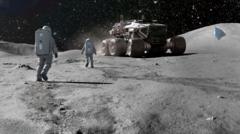
Helium-3 mining on the moon represents one of the most ambitious scientific endeavors of the 21st century. This lightweight isotope, abundant in lunar soil, has become increasingly valuable as global demand for clean energy sources accelerates. Unlike traditional fossil fuels, Helium-3 offers significant advantages for nuclear fusion reactions, making it a cornerstone of future energy infrastructure on Earth.
The growing interest in Helium-3 stems from its exceptional properties and potential applications. Scientists and energy experts worldwide recognize this element as a game-changer for sustainable power generation. Current market prices for Helium-3 reflect its scarcity on Earth, with projections indicating exponential price increases over the coming decades.
What Makes Helium-3 Scientifically Significant?
Helium-3 is a non-radioactive isotope of helium containing two protons and one neutron. Unlike its more common counterpart, Helium-4, this rare form has unique nuclear properties that make it exceptionally valuable for fusion energy research. When used in fusion reactions, Helium-3 produces minimal radioactive waste, addressing one of the primary concerns associated with conventional nuclear power plants.
The scientific community has long recognized Helium-3's potential for clean energy generation. Fusion reactions utilizing this isotope produce direct electrical output and minimal environmental contamination. This characteristic distinguishes Helium-3 from traditional nuclear fission processes, which generate substantial radioactive byproducts requiring extensive storage and management protocols.
Why Is Helium-3 So Expensive?
The extraordinary cost of Helium-3 results directly from its terrestrial scarcity. While small quantities exist in Earth's atmosphere and some helium production facilities, extracting this isotope requires specialized equipment and sophisticated separation technology. Current production methods remain cost-prohibitive for large-scale industrial applications, limiting accessibility to research institutions and aerospace organizations.
Market analysis indicates that Helium-3 prices continue climbing as research facilities increase their demand for fusion energy experiments. The limited supply coupled with growing scientific interest has created a supply-demand imbalance that pushes costs upward. Forecasts suggest that without alternative sources, Helium-3 availability will become increasingly constrained for mainstream energy applications.
The Moon: An Untapped Reservoir of Helium-3
Lunar soil contains substantially higher concentrations of Helium-3 compared to Earth's atmosphere and surface. Solar winds have deposited this valuable isotope on the moon's surface for billions of years, creating vast deposits within the regolith. Scientific surveys indicate that the moon harbors sufficient Helium-3 reserves to theoretically power human civilization for thousands of years.
The lunar environment preserved these deposits without atmospheric weathering or geological processes that would otherwise disperse the isotope. Unlike Earth, where Helium-3 diffuses into space, the moon's surface accumulation represents an immense, virtually untapped resource. Preliminary geological studies suggest extraction would yield substantial quantities suitable for fusion energy applications.
Lunar Mining Operations: Technical Challenges and Solutions
Helium-3 mining on the moon requires innovative extraction methodologies adapted to extraterrestrial conditions. Mining operations would involve heating lunar regolith to release volatile compounds, including helium isotopes. Advanced vacuum extraction systems would separate Helium-3 from other gases, utilizing temperature differentials and molecular weight distinctions.
Space agencies and private companies have proposed various technical approaches for lunar mining. Heat-based extraction methods show the most promise for industrial-scale operations. Equipment designed to function in harsh lunar conditions, including extreme temperature variations and radiation exposure, represents a significant engineering challenge that international space programs are actively addressing.
Economic Viability of Lunar Mining
Economic projections suggest that Helium-3 mining on the moon becomes increasingly viable as terrestrial demand escalates. Transportation costs, while substantial, diminish relative to the extraordinary value of extracted material. A single lunar mission could potentially deliver Helium-3 quantities worth billions of dollars when compared to current market valuations.
Cost-benefit analyses indicate that dedicated mining operations could recover their investment through relatively limited extraction yields. As fusion energy technology matures and commercial applications expand, market demand will likely justify the substantial infrastructure investment required for sustainable lunar operations.
Global Space Programs and Commercial Ventures
International space agencies have initiated formal research programs examining Helium-3 extraction possibilities. The European Space Agency, NASA, and China's space program have all conducted studies evaluating lunar resource utilization strategies. Simultaneously, private aerospace companies are developing technologies and business models that could enable commercial mining operations within the next two decades.
Collaborative international efforts aim to establish frameworks governing lunar resource extraction. These discussions balance commercial interests with scientific objectives and environmental stewardship principles. Government agencies and private entities recognize that coordinated approaches will accelerate technology development while addressing regulatory and ethical considerations.
Conclusion: Helium-3 as a Future Energy Frontier
Helium-3 mining on the moon represents a transformative opportunity for global energy production. This rare isotope offers genuine potential for revolutionizing how humanity generates electricity through clean, efficient fusion reactions. While technical challenges remain substantial, the convergence of advancing space technology, growing energy demands, and international collaboration suggests that lunar Helium-3 extraction may transition from theoretical possibility to operational reality within this century.


