Glacier Collapse Triggers Massive Floods in Nepal-Tibet Border Region
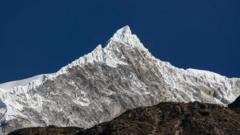
Glacier Collapse Floods Devastate Nepal-Tibet Region
A catastrophic glacier collapse floods crisis has emerged as the primary culprit behind the devastating flooding events that recently impacted the Nepal-Tibet border region, according to emerging scientific analysis. The glacier collapse floods incident underscores the accelerating environmental transformations occurring across the world's highest mountain range, where rising temperatures continue to destabilize massive ice formations that have remained largely intact for millennia.
Scientific Evidence Points to Ice Instability
Preliminary investigations conducted by international research teams have systematically examined geological data, satellite imagery, and eyewitness accounts to reconstruct the sequence of events leading to the disaster. The findings definitively indicate that a significant glacial rupture released enormous volumes of water, ice, and debris that cascaded downslope at tremendous velocity. This catastrophic discharge overwhelmed downstream river systems, transforming normally manageable waterflows into torrential currents capable of destroying infrastructure and displacing communities.
Understanding the Glacial Collapse Mechanism
The specific glacier collapse floods mechanism involved the destabilization of accumulated ice and snow layers that had weakened due to prolonged exposure to above-freezing temperatures. As meltwater percolated through crevasses and fractures in the glacial structure, it accumulated within the ice mass, increasing internal pressure and compromising structural integrity. Eventually, these stresses exceeded the tensile strength of the remaining ice, triggering a sudden failure that released the impounded water in a violent surge.
The Broader Context of Himalayan Ice Loss
Scientists emphasize that this glacier collapse floods event represents just one manifestation of a larger pattern affecting the Himalayan mountain system. Throughout the region, thousands of glaciers are retreating at unprecedented rates, shrinking both in area and volume. The Himalayan ice melting process has accelerated dramatically over the past two decades, driven by multiple factors including increased atmospheric carbon dioxide concentrations, reduced albedo from dust deposition on ice surfaces, and changing precipitation patterns that deliver less snow to replenish glacial systems.
Climate Change as the Root Cause
The underlying driver behind the glacier collapse floods and associated Himalayan ice melting is unequivocally linked to anthropogenic climate change. Rising global temperatures have fundamentally altered the energy balance affecting mountain ice masses. Where glaciers once accumulated more mass during winter months than they lost during summer, many now experience net mass loss every single year. This imbalance propels the continuous retreat and thinning of ice formations that had persisted for thousands of years.
Immediate and Long-Term Consequences
The recent glacier collapse floods disaster has resulted in substantial loss of life, extensive property damage, and widespread disruption to local economies that depend on stable water supplies and hydroelectric generation. Beyond the immediate humanitarian crisis, scientists warn that similar events will likely recur with increasing frequency as glacial systems continue destabilizing. Communities downstream from vulnerable glaciers face growing risks of unexpected flooding, while regions dependent on glacial meltwater for agriculture and drinking water confront uncertain water availability in coming decades.
Implications for Future Water Security
The glacier collapse floods incident highlights critical vulnerabilities in water management infrastructure across South Asia. Millions of people residing in areas fed by Himalayan river systems depend on glacial discharge for essential services. As Himalayan ice melting proceeds irreversibly, societies must prepare for profound transformations in seasonal water availability, potentially triggering conflicts over resource allocation and necessitating massive investments in alternative water supply systems.
Scientific Response and Future Monitoring
Research institutions have intensified monitoring efforts to identify other potentially unstable glaciers in the Himalayan region. Advanced remote sensing technologies, including satellite radar and high-resolution photography, now enable scientists to detect subtle changes in glacier surface elevation, velocity, and stress patterns. This surveillance network aims to provide early warning when glacier collapse floods risks escalate, potentially allowing authorities to implement evacuation protocols before catastrophic failure occurs.
The Nepal-Tibet glacier collapse floods disaster serves as a stark reminder that climate change operates not only as an abstract environmental concept but as a tangible force reshaping physical geography and threatening human populations. Unless global greenhouse gas emissions decline substantially, similar glacier collapse floods events will increasingly characterize the mountain landscape, with profound implications for ecological stability and human welfare across Asia.


