England's Drought Crisis Deepens as Two-Thirds Face Water Shortage
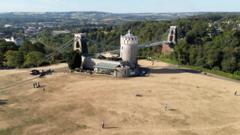
England's Escalating Drought Crisis Reaches Critical Milestone
The England drought crisis has intensified significantly, with more than two-thirds of the nation now officially classified under drought status. This unprecedented expansion of water-stressed regions underscores the mounting challenges facing the country's water infrastructure and environmental stability as climate conditions continue to deteriorate across multiple regions.
The progression into drought status represents a substantial escalation in water management concerns, affecting millions of residents across previously unaffected areas. This widespread classification signals the urgency required in implementing comprehensive water conservation measures and long-term sustainability strategies throughout England.
Newly Designated Drought Regions
Several critical regions have transitioned into official drought status, marking a turning point in the national water crisis. The East Midlands, Lincolnshire, and Northamptonshire have been formally classified as drought areas, joining an expanding list of water-stressed zones experiencing severe precipitation deficits.
Additionally, Kent and East Sussex have entered drought classification, intensifying concerns about agricultural productivity and domestic water availability in the southeast. Simultaneously, the Solent region and the South Downs have also been designated as drought areas, further expanding the geographical scope of this environmental emergency.
Regional Impact and Challenges
The designation of the East Midlands region into drought status carries significant implications for one of England's most economically productive areas. This classification affects substantial agricultural operations, industrial water consumers, and residential water security across the Midlands.
Lincolnshire and Northamptonshire, known for intensive agricultural activities, now face considerable pressure to implement water-saving protocols. These regions depend heavily on groundwater reserves and surface water sources for farming operations, irrigation systems, and livestock management, all of which are now compromised by drought conditions.
Southeast England's Water Scarcity
The southeast of England has experienced some of the most severe impacts, with Kent and East Sussex joining the drought classification. These regions, already facing population density challenges and competing water demands, now confront additional constraints on available water resources.
The Solent area, encompassing crucial ports and residential communities, and the South Downs, a region of significant environmental and agricultural importance, represent critical additions to England's drought-affected territories. These designations underscore how the drought crisis has penetrated regions previously considered relatively secure in water availability.
Implications for Water Management
The classification of more than two-thirds of England into drought status necessitates immediate action from water authorities, government agencies, and individual consumers. Water companies must implement tiered restrictions, potentially including outdoor water bans, hosepipe restrictions, and industrial water allocation controls.
Agricultural sectors across affected regions face substantial challenges in maintaining crop yields and livestock operations without adequate water supplies. Farmers in the East Midlands, Lincolnshire, Northamptonshire, Kent, East Sussex, and other designated areas must adapt irrigation practices and potentially reduce acreage under cultivation.
Environmental and Economic Consequences
The widespread drought status across England's regions carries profound environmental consequences, affecting ecosystems, biodiversity, and natural water cycles. Reduced rainfall and depleted groundwater reserves threaten freshwater habitats and species dependent on consistent water availability.
Economically, the drought crisis threatens multiple sectors including agriculture, food production, manufacturing, and tourism. Water-intensive industries face operational constraints, while regions dependent on water-related activities experience reduced activity and revenue generation.
Looking Forward: Drought Response Strategies
Addressing the England drought crisis requires coordinated efforts across local, regional, and national levels. Water conservation campaigns targeting household consumption, business water audits, and investment in water infrastructure improvements form essential components of response strategies.
Long-term solutions demand consideration of climate adaptation measures, sustainable water management practices, and potential infrastructure development. The classification of more than two-thirds of England into drought status serves as a critical warning regarding the necessity for proactive environmental stewardship and resource management planning.
As the drought crisis continues affecting the East Midlands, Lincolnshire, Northamptonshire, Kent, East Sussex, the Solent region, and the South Downs, stakeholders across all sectors must prioritize water conservation and sustainable practices to mitigate further deterioration of water security across England.


