Cairngorms Wildfire Escalates as Wind Shift Raises Major Incident Alert
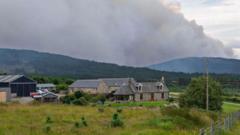
Cairngorms Wildfire Declared Major Incident Amid Dangerous Conditions
Emergency services have officially declared a major incident in the Cairngorms region as a significant shift in wind patterns intensifies the Cairngorms wildfire threat. The decision to escalate the alert status reflects growing concerns among fire management officials regarding the fire's potential trajectory and expansion across the mountainous terrain.
The change in atmospheric conditions has prompted rapid response protocols, with emergency coordinators warning that the evolving weather patterns could push flames toward populated areas at an accelerated pace. Fire and rescue teams have been mobilized across multiple stations to monitor the developing situation closely.
Mass Evacuation in Nethy Bridge
In a precautionary measure, all residents currently occupying the village of Nethy Bridge have been evacuated due to the escalating Cairngorms wildfire risk. Local authorities initiated the evacuation process to ensure public safety as the fire's behavior becomes increasingly unpredictable given the meteorological changes.
Nethy Bridge, a residential community situated within proximity to the affected zone, was identified as a priority evacuation area. Residents were given guidance on evacuation routes and assembly points, with emergency services providing transportation and support to vulnerable populations including elderly residents and families with young children.
Wind Pattern Changes Drive Fire Spread
Meteorological specialists have identified a critical wind change that is redirecting smoke and ember patterns across the landscape. The shift in wind direction represents one of the most significant factors affecting the Cairngorms wildfire's potential to advance, as prevailing conditions could carry flames toward previously safe zones.
Fire behavior experts emphasize that wind fluctuations in mountainous regions like the Cairngorms present unique challenges, as topography can create unpredictable gusts and directional shifts. The current wind change was detected during routine atmospheric monitoring, prompting immediate consultation between fire service commanders and meteorological advisors.
Emergency Response Intensifies
The declaration of a major incident status has activated additional emergency protocols beyond standard fire management procedures. Specialized teams, including incident command units and tactical wildfire suppression crews, have been deployed to establish containment strategies.
Coordination between multiple agencies—including Police Scotland, Scottish Fire and Rescue Service, and local health authorities—has been strengthened to ensure comprehensive coverage of affected and potentially affected communities. Communication channels have been established to provide real-time updates to residents and stakeholders regarding evacuation orders and safety recommendations.
Public Safety Recommendations
Authorities have issued guidance advising residents in surrounding areas to remain vigilant and prepared for potential evacuation notices. The public is urged to monitor official channels for updates regarding the Cairngorms wildfire situation and to avoid the affected region entirely.
Residents should maintain packed emergency kits including important documents, medications, and essential supplies in case evacuation becomes necessary. Those living in proximity to the Cairngorms fire zone are encouraged to register with local alert systems to receive timely notifications about air quality warnings and safety directives.
Current Fire Management Operations
Fighting conditions remain challenging as the Cairngorms wildfire continues to impact air quality and visibility across the region. Aerial reconnaissance teams are conducting continuous assessments to track fire perimeters and identify potential progression pathways.
Ground crews are working to establish firebreaks and remove combustible vegetation in strategic locations to slow the fire's advance. Water-dropping operations and foam application techniques are being employed where terrain accessibility permits. The coordination of these efforts represents a major undertaking given the vast expanse of the affected landscape.


